Two novels that teach the CCAR-P exam
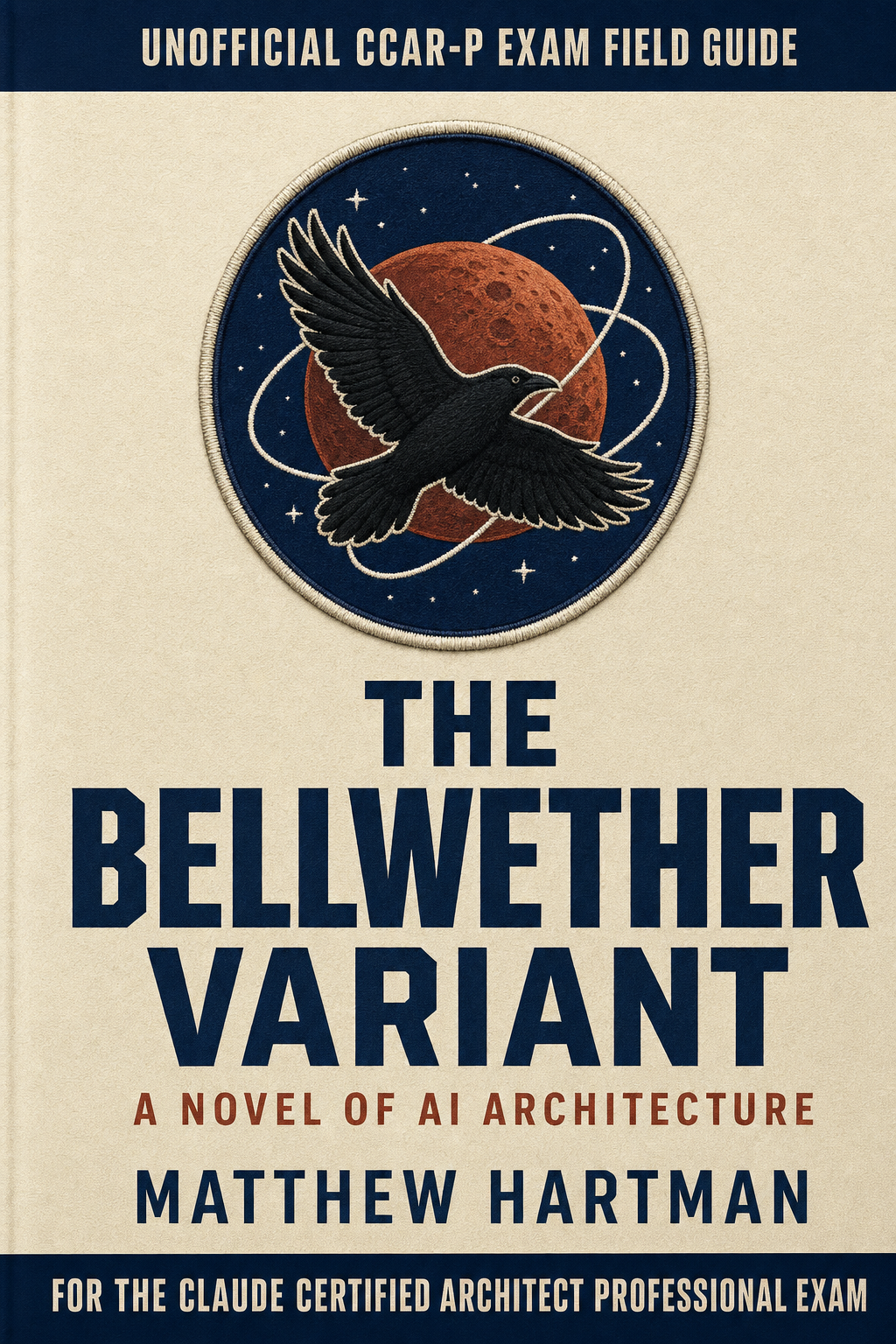
The Bellwether Variant
Ray Delgado has spent six years building AI systems for cargo — and he took the Corvus Space Systems contract because, before he was done, he wanted to work something with a crew manifest. What Corvus needs sounds simple: an assistant that helps flight controllers find the right procedure before a comm window closes. What Corvus has is 26 million pages of documentation, a scanned 1990s fax tranche where OCR flipped "do not proceed" to "do proceed," a vehicle already lost to a configuration error nobody caught — and, in nine months, four astronauts on the far end of a fourteen-minute light delay.
For readers of The Phoenix Project and The Martian — and for anyone sitting the CCAR-P who has had enough of flashcards.
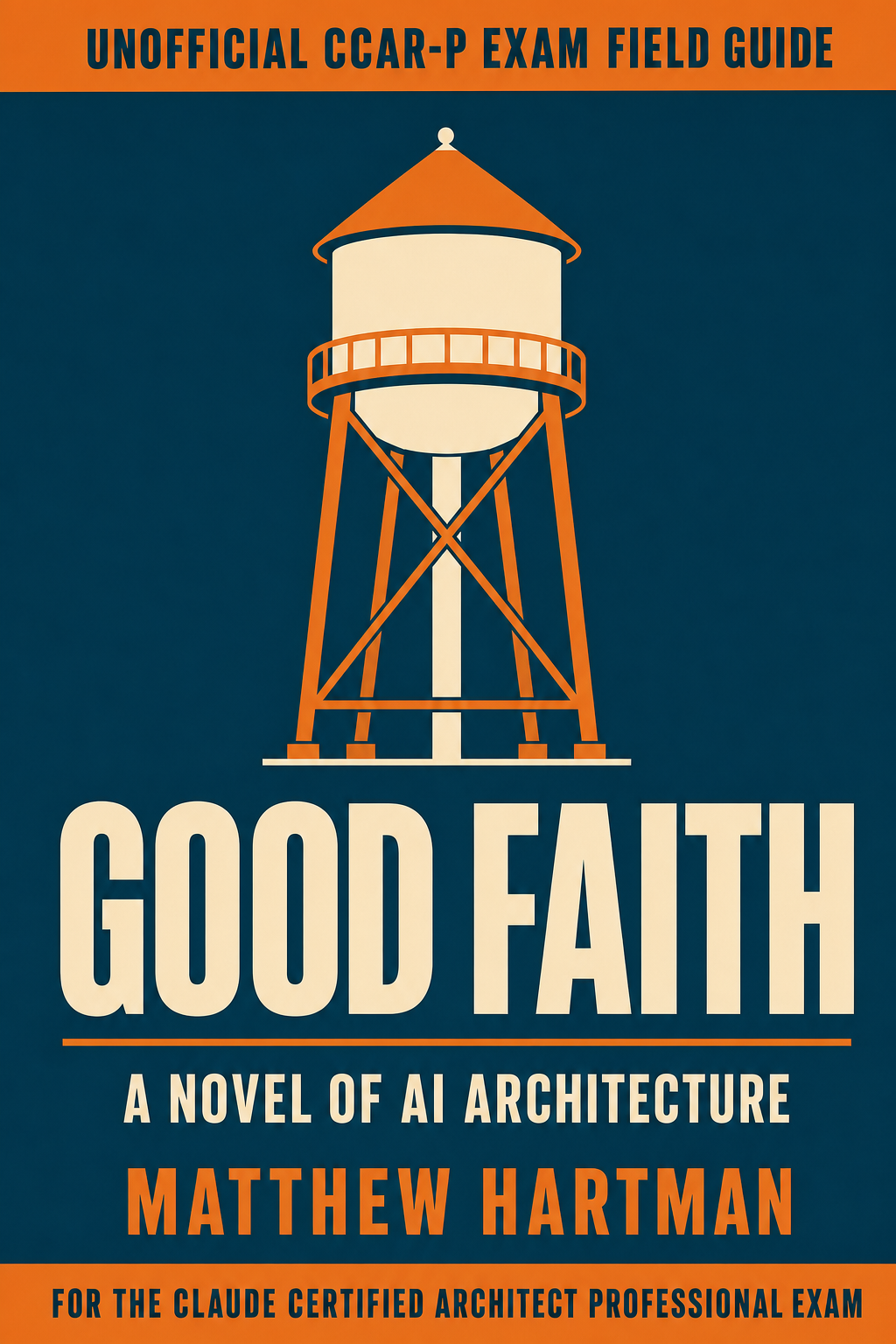
Good Faith
Bluestem Mutual has been paying claims across the Midwest for a hundred and four years, and its unofficial motto hangs on the water tower: settle honest claims fast. Then the board wants "an AI strategy," the claims backlog wants anything at all, and a consultant named Ray Delgado gets nine months to build an assistant that drafts coverage answers adjusters can trust — grounded in policy forms that change quarterly, endorsements that contradict each other, and a regulatory examiner who reads everything. Getting it wrong isn't an outage. It's bad faith, and in this business bad faith has a legal meaning and a price.
For readers of The Phoenix Project — and for anyone sitting the CCAR-P who learns better from a story than a syllabus.
| One | Discovery |
| Two | Architecture selection |
| Three | Cost engineering |
| Four | Retrieval and grounding |
| Five | Evaluation |
| Six | Safety and governance |
| Seven | Production scale |
| Eight | Handoff |
Claude drafted the prose. The three weeks after that are the interesting part.
Generation was one evening. The editing loop was three weeks: a slop-audit agent whose only job was to find patterns a human would call "machine wrote this," a domain reviewer, and a judge scoring each draft. The audit came back with 24 findings, and eight of them were the same failure — the paragraph ends on a sentence that grades the paragraph.
It also found 11 coffee-cup gestures across three scenes. Carried in, set down, held in both hands, rinsed. No single one is wrong. Together they are a model with one idea about what hands do.
The finding that generalized: bans have to be re-pasted into every generation call, not stated once. Not a style guide the model reads once. A contract it re-signs every call.
Matthew Hartman is a Director of Intelligent Systems who builds production AI systems for a living, and is Claude Certified Architect – Professional, scored 965/1000. He sits every exam he writes for.
Both books disclose it plainly: the prose was AI-generated under the author's direction with extensive human editing. The engineering, the failures, and the frameworks are real.